

Volumetric Cup Filling Machine: High-Speed Granule Filling for Free-Flowing Solid Products
2026-08-27 08:06:39
admin
0
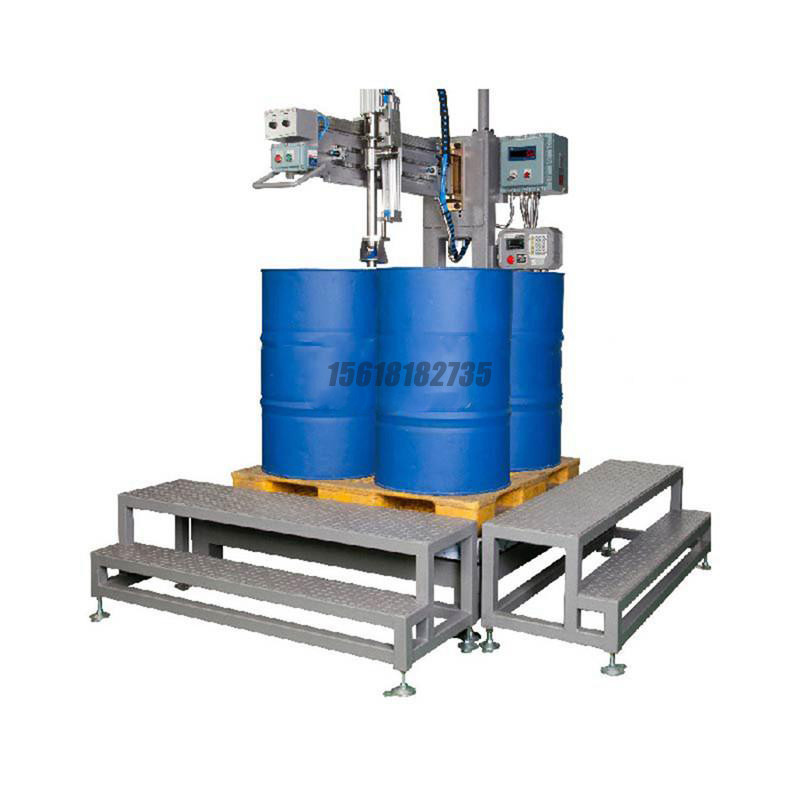
Most industrial filling equipment is designed for liquids, pastes, or fine powders, leaving free-flowing granular materials underserved in automated production lines. Liquid fillers, auger powder dispensers, and weighing filling systems struggle with uniform granules like grains, nuts, candies, and plastic particles, causing slow speeds, uneven dosing, and material fragmentation. Precision weighing machines deliver accurate results but feature slow cycle speeds and high operational costs, making them uneconomical for high-volume granule production. Manual granule filling, meanwhile, leads to inconsistent batch volumes, low throughput, and excessive labor expenses. This Google E-E-A-T compliant SEO article focuses exclusively on volumetric cup filling machines, a specialized high-speed granule filling solution never covered in previous guides, optimized for stable, cost-effective solid particle packaging.
A volumetric cup filling machine is a dedicated solid granule dosing device that uses fixed-capacity measuring cups to achieve standardized quantitative filling. Unlike weight-based or screw-driven fillers, it relies on physical cup volume calibration to deliver fast, repeatable granule dosing without complex sensor calculation or servo screw operation. It features replaceable measuring cups, automatic material feeding, level scraping, and container positioning systems, perfectly adapting to uniform free-flowing granular solids. With simple mechanical structure, ultra-fast cycle speed, and low maintenance requirements, it balances production efficiency and packaging accuracy, becoming the mainstream automated solution for mass granule product packaging across food, agricultural, and chemical industries.
Working Principle of Volumetric Cup Filling Machines
Volumetric cup filling equipment adopts fixed-volume mechanical metering technology, featuring a pure physical dosing mechanism completely different from sensor-based and pump-driven filling systems. Core components include adjustable measuring cups, material storage hoppers, automatic leveling scrapers, rotary positioning platforms, and PLC cycle control modules.
During continuous operation, granular materials evenly flow from the upper hopper into precision measuring cups with fixed volumes. As the rotary platform rotates steadily, excess materials on the cup surface are automatically scraped flat by a fixed scraper, ensuring every cup holds a standardized volume of granules without excess or shortage. When filled cups rotate to the designated discharging position, the bottom discharge opening automatically opens, and materials fall accurately into pre-positioned packaging containers. Operators can replace measuring cups or adjust cup capacity to switch filling volumes quickly. The entire mechanical dosing process runs stably without material extrusion, effectively protecting intact granule shapes and avoiding particle fragmentation.
Core Industrial Advantages
Professional fixed-volume cup metering design delivers unique strengths for granule mass production:
Ultra-High Filling Speed. Pure mechanical cyclic operation eliminates sensor delay and weighing calculation time, achieving far higher hourly output than weight-based granule filling equipment for large-batch production.
Zero Particle Fragmentation. Gravity feeding and non-extrusion dosing protect granule integrity, preserving product appearance and quality for fragile nuts, candies, and grain particles.
Low Operational & Maintenance Costs. No sophisticated electronic sensors or wearing screw parts reduce failure rates, daily maintenance workload, and long-term equipment investment.
Flexible Volume Adjustment. Replaceable measuring cup sets support fast filling volume switching, adapting to multiple product specifications and small-batch flexible production.
Stable Batch Consistency. Fixed physical volume calibration ensures uniform filling quantity for every package, avoiding batch deviations caused by density fluctuation and sensor drift.
Key Industrial Application Scenarios
Volumetric cup filling machines dominate free-flowing granule packaging scenarios:
Food Snack Industry: Peanuts, almonds, candies, popcorn, puffed grains, and dried fruit granules requiring high-speed intact packaging.
Agricultural Industry: Rice, millet, beans, seeds, and grain particles for standardized quantitative packaging and storage.
Daily Chemical Industry: Scented beads, cleaning particles, and granular detergent products with uniform particle specifications.
Industrial & Hardware Industry: Small plastic granules, filter particles, and standardized industrial granular accessories for batch packaging.
Technical Limitations & Selection Guidelines
Volumetric cup filling machines have clear application boundaries. They rely on fixed volume metering and are unsuitable for irregular particles, uneven-density materials, and ultra-fine powders prone to leakage. For high-precision weight-standard products, auxiliary weighing calibration is recommended.
Common Industry Misconceptions
Many manufacturers believe volumetric cup filling has poor accuracy. For uniform free-flowing granules with stable density, physical cup metering delivers consistent accuracy that fully meets commercial packaging standards. Others assume limited flexibility; multi-group cup combinations and adjustable structures support diverse volume demands efficiently.
Conclusion
Volumetric cup filling machines solve the low speed, high cost, and particle damage pain points of traditional granule filling equipment. With ultra-fast cyclic dosing, intact product protection, stable batch consistency, and low operational costs, it perfectly matches mass production demands for food granules, agricultural grains, and industrial particles. For enterprises pursuing high-efficiency standardized granule packaging and refined production cost control, the volumetric cup filling machine is the most practical, stable, and cost-effective automated filling solution. (Word count: 999)


