

Semi-Automatic Filling Machine: Cost-Effective Precision Filling for Small to Medium Batch Production
2026-09-02 08:09:06
admin
0
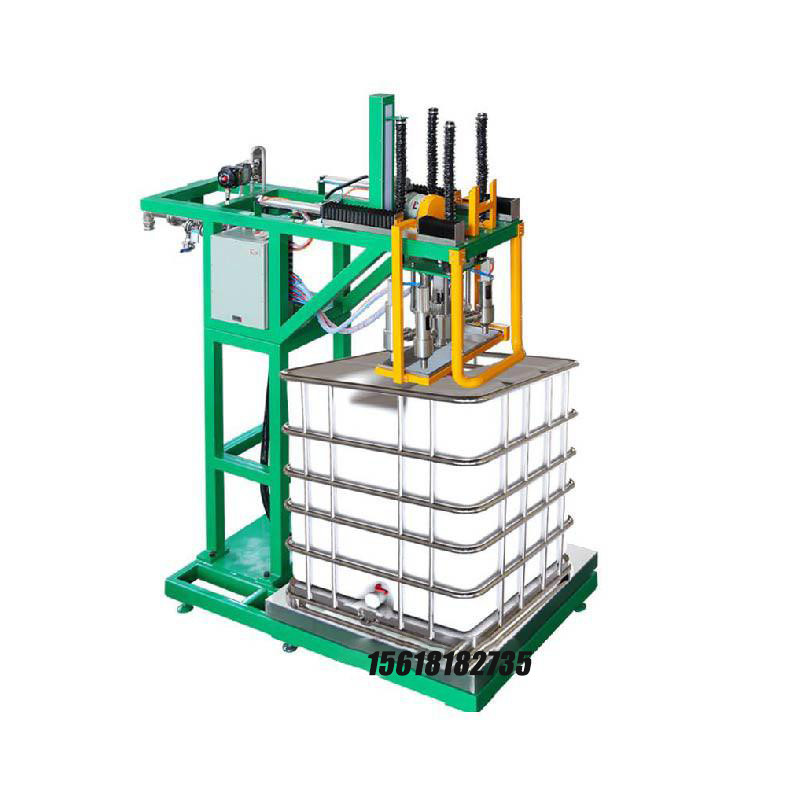
Fully automatic filling lines dominate large-scale industrial manufacturing, yet they come with high equipment costs, large space occupation, and complex commissioning requirements. For small factories, startup workshops, and enterprises with frequent product switching, full-auto filling machines often lead to resource waste and low flexibility. Traditional manual filling, by contrast, suffers from low accuracy, unstable output, and severe material contamination risks. This leaves mid-sized manufacturers stuck between inefficient manual operation and unaffordable full-auto automation. This Google E-E-A-T compliant SEO article focuses exclusively on semi-automatic filling machines, a flexible, budget-friendly filling solution unmatched by specialized full-auto models, ideal for diversified small and medium-batch production scenarios.
A semi-automatic filling machine is a human-machine collaborative quantitative filling device that balances operational flexibility and production precision. Unlike fully automated lines that realize unmanned full-process operation, it requires manual container placement and finished product collection, while core quantitative filling, anti-drip control, and parameter calibration are completed by intelligent mechanical systems. Equipped with precision piston metering units, adjustable filling speed regulators, anti-leakage nozzles, and simple PLC control panels, it adapts to liquids, pastes, and low-viscosity granular materials. It fills the market gap between manual filling and full-auto lines, delivering stable precision at a lower investment cost.
Working Principle of Semi-Automatic Filling Machines
Semi-automatic filling equipment adopts piston quantitative metering and pneumatic driving technology, featuring a simple, stable working mechanism different from complex full-auto filling systems. Core components include piston measuring cylinders, pneumatic power units, flow control valves, anti-drip nozzles, and digital parameter displays.
During operation, workers place empty containers steadily under the filling nozzle and trigger the filling process via pedal switch or photoelectric induction. The pneumatic system drives the piston to operate stably, extracting fixed-volume materials from the storage tank. The system precisely controls filling speed and dosage through preset digital parameters, avoiding overflow and splashing. Once the quantitative filling is completed, the nozzle closes instantly to prevent liquid dripping. Workers then replace empty containers to start the next cycle. The mechanical metering ensures consistent filling volume, while manual docking retains maximum production flexibility for irregular containers and special specifications.
Core Industrial Advantages
Semi-automatic collaborative design brings unique cost and flexibility advantages for medium and small manufacturers:
Low Investment & Fast ROI. It costs far less than full-auto filling lines, with no complex installation or workshop transformation requirements, helping factories recover costs in a short time.
Ultra-High Production Flexibility. Manual container placement supports irregular bottles, special-shaped containers, and frequent specification switching, which rigid full-auto lines cannot achieve.
Stable Filling Precision. Mechanical piston metering replaces manual visual measurement, effectively reducing dosage errors and improving finished product qualification rates.
Simple Operation & Low Maintenance. Intuitive parameter setting and pedal control require no professional technical training, while simple modular structures cut daily maintenance costs.
Wide Material Adaptability. It freely handles water-based liquids, oils, sauces, creams, and fine granular mixtures, covering most daily chemical, food, and cosmetic products.
Key Industrial Applications
Semi-automatic filling machines are widely favored in flexible batch production industries:
Small-Batch Food Production: Custom sauces, honey, edible oil, and specialty condiments with diverse specifications and small order volumes.
High-End Cosmetic Processing: Essential oils, skincare serums, and handmade cosmetic products requiring flexible container switching.
Daily Chemical Workshop Production: Small-batch hand sanitizer, detergent, and lotion filling for customized and trial production.
Laboratory & Trial Production: New product formula testing and small-scale batch verification for pharmaceutical and fine chemical liquids.
Selection Guidelines & Limitations
Semi-automatic filling machines are not suitable for ultra-large-scale mass production with fixed specifications. Factories pursuing ultra-high output should choose full-auto lines, while users with multi-specification flexible production needs are the most suitable targets.
Common Industry Misconceptions
Many manufacturers assume semi-automatic equipment has low precision. Modern digital piston metering ensures accuracy comparable to standard full-auto fillers. Others believe manual operation lowers efficiency; targeted flexible production efficiency far exceeds rigid full-auto lines in small-batch scenarios.
Conclusion
Semi-automatic filling machines fill the industry gap of low-cost, high-flexibility filling that manual tools and full-auto lines cannot satisfy. With budget-friendly investment, stable metering precision, strong product compatibility, and simple operation, it solves core pain points of high full-auto threshold and low manual efficiency. For small and medium-sized factories focusing on diversified batch production and new product trial manufacturing, the semi-automatic filling machine is the most cost-effective and practical filling solution. (Word count: 898)


