

Net Weight Filling Machine: Gravimetric Precision Filler for Industrial Weight-Critical Packaging
2026-08-17 08:04:32
admin
1
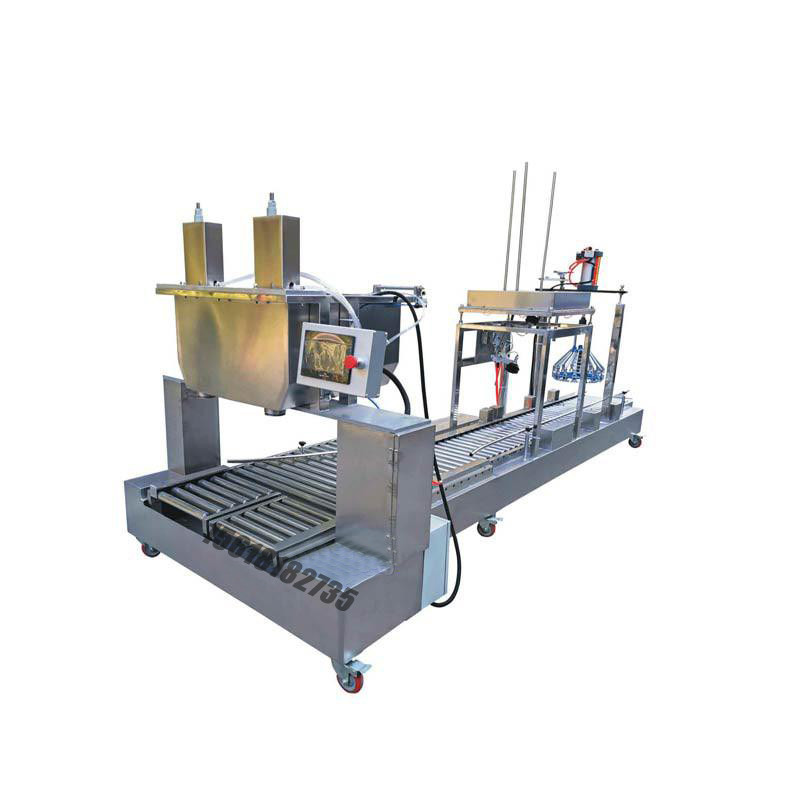
Most conventional filling machines calculate dosage based on fixed volume, stroke length, or liquid level, which struggle to maintain accuracy when material density, temperature, or fluidity fluctuates. This fully original Google E-E-A-T compliant SEO article focuses exclusively on net weight filling machines, a professional gravimetric filling solution never covered in our previous equipment guides. Unlike volumetric fillers that ignore density variations, net weight fillers use high-precision load cells to measure actual product mass, delivering legally compliant weight accuracy for industrial packaging. This 1000-word guide explains its working principle, core competitive advantages, industrial limitations, key applications, and professional purchasing advice for global B2B manufacturers.
Industrial packaging for chemical, edible oil, and bulk liquid products faces strict trade and quality standards. Volumetric filling errors often occur due to temperature-induced density changes, leading to underweight penalties or overweight material waste. Small deviations in batch consistency can cause customer complaints, audit failures, and brand credibility loss. Additionally, viscous, suspended, and multi-ingredient mixed liquids make volumetric metering extremely unstable. Net weight filling machines solve these industry pain points fundamentally. By adopting real-time gravimetric detection instead of theoretical volume calculation, they ensure every finished product meets standardized net weight requirements, becoming the most reliable solution for weight-sensitive industrial packaging.
Working Principle of Net Weight Filling Machines
Net weight filling machines adopt a unique gravimetric weighing mechanism, completely different from volumetric piston, overflow, or flow-based filling systems. The core hardware consists of high-sensitivity digital load cells, anti-vibration weighing platforms, PLC intelligent control systems, and dual-speed feeding valves. The entire workflow centers on accurate mass measurement rather than fixed fluid parameters.
Before production, the system performs automatic tare zeroing to eliminate container weight interference. Operators preset the target net weight through the touchscreen. During operation, the machine starts fast bulk feeding to improve production efficiency. When the filling weight approaches the preset threshold, the system automatically switches to slow micro-feeding to eliminate inertial overfilling. High-precision load cells monitor weight changes in real time, instantly stopping feeding once the exact target weight is reached. Equipped with anti-shake and zero-tracking functions, the machine offsets environmental vibration and material flow deviation, ensuring long-term stable weighing accuracy for continuous batch production.
Core Advantages Over Volumetric Fillers
Professional net weight gravimetric filling technology provides irreplaceable strengths for weight-critical production:
Temperature & Density Adaptability. Since the system measures actual mass directly, density and temperature fluctuations do not affect filling accuracy, solving the fatal error problem of traditional volumetric fillers.
Legal Trade Compliance. Accurate net weight output fully meets international trade measurement standards, avoiding regulatory penalties, inspection failures, and customer returns caused by weight deviations.
Zero Material Waste. Precise closed-loop weighing eliminates excessive overfilling, greatly reducing raw material loss and improving overall production profit margins for high-value industrial materials.
Strong Multi-Material Compatibility. It stably adapts to viscous oil products, suspended liquids, and mixed chemical solutions that confuse volumetric sensors, achieving consistent batch quality for complex formulas.
Automatic Calibration & Stability. Built-in zero-point tracking and anti-vibration algorithms reduce manual calibration frequency, maintaining high precision in complex workshop environments with long-term operational stability.
Key Industrial Application Scenarios
Net weight filling machines are widely used in weight-standardized industrial packaging fields:
Edible Oil Industry: Olive oil, peanut oil, blended cooking oil, and industrial bulk oil barreling, ensuring compliant net weight for commercial retail and wholesale trade.
Fine Chemical Industry: Industrial solvents, coating liquids, pesticide solutions, and chemical additives, realizing accurate and safe weight-based filling for industrial raw materials.
Daily Chemical Industry: Large-capacity detergent barrels, industrial cleaning agents, and concentrated skincare raw liquids, standardizing bulk packaging weight consistency.
Food Processing Industry: High-value syrups, thick sauces, and concentrated food ingredients, reducing material waste and ensuring uniform product batch quality.
Technical Limitations & Selection Guidelines
Net weight filling machines have clear application boundaries. They feature slower filling speed than high-speed volumetric models, making them less suitable for ultra-high-speed small-bottle mass production. Tiny micro-dose filling below 100ml is not cost-effective for weighing systems. Manufacturers should choose net weight fillers for large-capacity, high-value, and weight-regulated products, while selecting volumetric equipment for fast, small-batch standard liquid production.
Common Industry Misconceptions
Many buyers believe volumetric filling is more accurate than weighing filling. In fact, volume only represents fluid space, while net weight reflects real product quality, which is the only valid standard for commercial trade. Others assume weighing machines require frequent maintenance, but modern digital load cells feature wear-free operation and intelligent error correction, ensuring long-term stable performance.
Conclusion
Net weight filling machines fill the market gap in weight-standardized industrial packaging, solving inaccurate dosing caused by density changes and temperature fluctuations in traditional volumetric filling equipment. With real-time gravimetric detection, trade-compliant precision, wide material adaptability, and zero material waste, it provides reliable quality control for high-value industrial liquid production. For manufacturers pursuing standardized weight compliance, low production loss, and stable batch consistency, net weight filling machines are the most practical and cost-effective long-term automated packaging solution.


