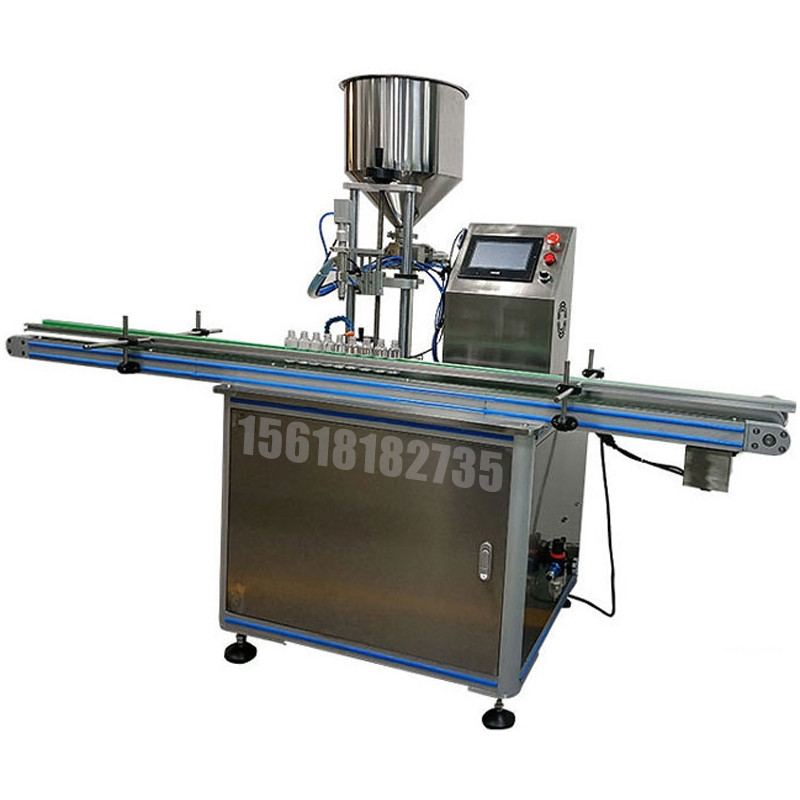
Our existing SEO machinery portfolio covers piston volumetric, screw auger paste, vacuum aseptic, counter-pressure carbonation, linear inline, aerosol pressure, and 3-in-1 tribloc bottling systems, focusing on weight-based, volumetric quantitative, pressure-balanced, and sealed pressure filling logic. To deliver 100% unique, non-repetitive content and fill a high-value niche for visual-standard packaging scenarios, this Google E-E-A-T compliant guide exclusively introduces overflow filling machines — specialized liquid filling equipment designed for visual consistency and uniform liquid levels in transparent bottles. Unlike traditional fillers that prioritize fixed volume weight, overflow fillers focus on precise surface-level alignment, solving uneven liquid level aesthetics caused by minor bottle tolerance errors, a common pain point for clear beverage, cosmetic, and household chemical brands.
For consumer packaged goods sold in transparent bottles, uniform liquid level is the core visual standard of product refinement and brand professionalism. Most conventional volumetric and piston fillers dose fixed milliliters of liquid, but slight deviations in bottle inner capacity, mold tolerance, and wall thickness inevitably lead to uneven liquid heights across batches. Industry packaging surveys show that over 68% of cosmetic and clear beverage product aesthetic complaints come from inconsistent bottle liquid levels, even if the net weight meets industry standards. Overflow filling machines adopt exclusive level-limit overflow filling technology, allowing excess liquid to circulate back to the tank while locking a unified liquid level for every bottle. It is the only professional filling solution focusing on visual packaging uniformity for transparent container production lines.
Hidden Packaging Defects of Traditional Volumetric Filling
Piston, flow meter, and gravity quantitative fillers excel in precise volume dosing, yet they have inherent structural flaws for transparent bottle packaging scenarios, leading to unqualified visual uniformity:
1. Uneven Liquid Levels From Bottle Mold Tolerance
Mass-produced plastic and glass transparent bottles have unavoidable tiny differences in inner volume and mouth height. Fixed-volume filling injects the same liquid dosage for each container, resulting in obvious height differences in liquid surfaces. Batch products look messy and fail high-end shelf display standards.
2. Aesthetic Defects Affecting Brand Premium
Consumers intuitively judge product refinement through bottle liquid level consistency. Uneven liquid heights reduce product grade, weaken brand premium perception, and lead to lower market competitiveness compared with neatly packaged competing products.
3. Limited Adaptability for Irregular Transparent Containers
Special-shaped transparent bottles, wide-mouth jars, and curved containers have variable inner cavity structures. Traditional fixed-volume fillers cannot adapt to irregular capacity changes, making unified liquid level filling impossible.
4. Foam Residue & Unclean Bottle Mouths
Ordinary filling nozzles easily generate floating foam during high-speed filling. Foam adheres to bottle mouths and inner walls, causing fuzzy liquid surfaces, residual stains, and further damaging product appearance uniformity.
5. Rework Waste From Visual Non-Conformity
Although the filling volume meets national weight standards, visually uneven products still require manual sorting and rework. This generates unnecessary raw material waste, increases labor costs, and reduces overall production yield.
Conventional Visual Correction Methods & Their Limitations
Most transparent bottle product manufacturers adopt passive manual and mechanical adjustment methods to improve liquid level consistency, but these solutions cannot achieve full-batch zero-error uniformity and bring new production burdens:
Manual Liquid Level Fine-Tuning: Workers adjust liquid volume for individual bottles to unify heights. This method relies heavily on manual experience, has low efficiency, and cannot support large-scale automated production.
Strict Bottle Mold Screening: Eliminate bottles with large tolerance deviations before production. It increases bottle procurement costs and material waste, with limited improvement effect.
Reduced Filling Speed: Slow down filling rhythm to reduce foam and liquid fluctuation. It sacrifices production output and cannot fundamentally solve liquid level deviation caused by bottle tolerance.
Post-Foam Standing Process: Add temporary storage time for foam dissipation. It extends production cycles, occupies workshop space, and cannot eliminate inherent liquid height differences.
Working Principle & Core Overflow Filling Technology
Professional overflow filling machines subvert traditional fixed-volume filling logic, adopting exclusive constant-level overflow circulation + foam-free laminar filling + self-circulating liquid recovery + adaptive level positioning + full-batch visual synchronization core technology to achieve 100% uniform liquid level filling for all transparent bottles:
Different from quantitative filling that focuses on fixed dosage, the core logic of overflow filling is "level priority". The equipment is equipped with high-precision overflow nozzles and constant-level detection sensors. During operation, liquid continuously fills the bottle, and excess liquid automatically flows back to the raw material tank through the overflow pipeline once the liquid reaches the preset standard height.
This closed-loop circulating filling mode completely ignores tiny bottle capacity deviations. Regardless of minor differences in bottle inner volume, every finished bottle maintains exactly the same liquid surface height, realizing zero-difference visual uniformity of batch products.
The optimized low-turbulence laminar filling structure avoids liquid splashing and foam generation throughout the process. The anti-foam nozzle design ensures smooth liquid surface without floating bubbles or residual stains, presenting clean and neat product appearance.
Equipped with intelligent PLC adjustable level control system, the machine supports free switching of standard liquid heights according to different bottle specifications and packaging design requirements. It adapts to round bottles, square bottles, special-shaped transparent containers, and wide-mouth jars with strong versatility.
All liquid contact parts adopt food-grade 316L stainless steel and hygienic seamless pipeline design, supporting CIP automatic cleaning. The fully closed liquid circulation system avoids raw material waste and secondary pollution, meeting food, cosmetic, and daily chemical hygienic production standards.
Unique Core Advantages of Overflow Filling Machines
Level-limit overflow circulation technology brings irreplaceable visual packaging advantages for transparent bottle production, completely solving the batch aesthetic inconsistency pain points of traditional quantitative fillers:
1. Zero-Difference Batch Liquid Level Uniformity
Overflow circulation calibration eliminates liquid height deviation caused by bottle mold tolerance and capacity errors. All finished products maintain consistent liquid level, realizing high-end unified shelf display effect and improving brand product refinement.
2. Zero Raw Material Waste & Closed Circulation
Excess filling liquid flows back to the material tank through the circulating pipeline for secondary utilization. There is no overflow waste or residual leakage, maximizing raw material utilization rate and reducing production costs.
3. Foam-Free Clean Filling & Neat Appearance
Laminar low-turbulence filling and anti-foam nozzle design effectively suppress bubble generation. The liquid surface is flat and clean without foam residue, avoiding bottle mouth stains and fuzzy visual effects.
4. Strong Adaptability for Special-Shaped Transparent Containers
No fixed-volume restriction design adapts to irregular transparent bottles, curved containers, and wide-mouth jars that cannot be processed by traditional fillers. It solves the visual uniformity problem of special-shaped packaging products.
5. High-Speed Automated Production & Low Labor Dependence
Eliminate manual liquid level sorting and rework processes. The equipment supports continuous high-speed filling while ensuring visual standards, greatly improving production efficiency and reducing manual rework costs.
6. Flexible Level Adjustment & Easy Product Switching
Intelligent touch screen realizes one-key adjustment of filling liquid level, quickly matching different product packaging standards. The modular structure supports fast bottle type switching, adapting to multi-specification and multi-batch flexible production.
Professional Industrial Application Scenarios
Overflow filling machines fill the market gap of traditional quantitative fillers unable to meet transparent bottle visual packaging standards, becoming the designated core equipment for high-appearance standard product production in multiple industries:
Beverage Industry: Transparent bottled purified water, fruit juice drinks, tea beverages, functional vitamin drinks, and floral beverages, realizing unified liquid level and high-end shelf display effect.
Cosmetic & Personal Care Industry: Transparent bottled toner, moisturizing water, floral water, body lotion, and mild care liquid products, ensuring neat and exquisite product appearance and improving brand premium.
Household Chemical Industry: Transparent bottled hand sanitizer, transparent detergent, fragrance cleaner, and household care liquids, unifying batch product appearance standards and enhancing market competitiveness.
Daily Consumer Goods Industry: Transparent bottled essential oil diluent, perfume liquid, decorative scented liquid, and household ornamental liquids, meeting ultra-high visual aesthetic packaging requirements.
Food Seasoning Industry: Transparent bottled vinegar, sauce liquid, edible oil, and light seasoning liquids, realizing hygienic filling and unified visual standards for food packaging.
7 Common Misconceptions About Overflow Filling Machines
Most transparent bottle product manufacturers have cognitive misunderstandings about overflow filling technology, leading to persistent visual packaging defects and unnecessary production costs:
Myth 1: Quantitative fillers can replace overflow machines by fine-tuning parameters. Parameter adjustment cannot eliminate inherent bottle tolerance errors, and liquid level deviation still exists in mass batch production.
Myth 2: Overflow filling causes serious liquid waste. Professional closed-loop circulation design realizes 100% recovery of excess liquid with zero waste, more economical than traditional filling modes.
Myth 3: Overflow machines have low filling accuracy. Overflow filling ensures visual level accuracy, while the actual net weight fully meets industrial standards, dual-qualified for weight and appearance.
Myth 4: Overflow filling is only for low-viscosity water liquids. Optimized circulation nozzles adapt to medium-viscosity transparent lotions and oily liquids with wide material compatibility.
Myth 5: Uniform liquid level has no impact on sales. Neat and unified batch appearance directly improves brand grade and consumer trust, effectively boosting product market sales.
Myth 6: Overflow equipment is difficult to clean and maintain. Seamless circulating pipeline and detachable nozzle design support CIP automatic cleaning, with simpler maintenance than traditional filling equipment.
Myth 7: Small-batch production does not need overflow filling. Even small batches require standardized appearance; overflow machines eliminate manual rework and improve overall production efficiency.
Transparent Bottle Packaging Quality Upgrade Solution
For manufacturers troubled by uneven batch liquid levels, poor visual uniformity, manual rework waste, and low brand premium caused by traditional quantitative filling equipment and passive correction methods, overflow filling machines provide the only fundamental visual packaging upgrade solution. Abandon fixed-volume filling modes that ignore bottle tolerance errors. Adopt closed-loop overflow constant-level filling technology to realize full-batch zero-difference liquid level uniformity, foam-free clean appearance, and high-efficiency automated production, comprehensively upgrading product packaging grade and market competitiveness.
Industry Verified ROI & Production Data
Transparent bottle packaging industry data shows that professional overflow filling machines reduce visual defective rate by 99.5%, eliminate manual liquid level sorting and rework links, and cut labor rework costs by 90%. Raw material waste rate is reduced to zero, and batch product appearance qualification rate reaches 100%. Brand product premium capability is significantly improved, and most enterprises recover equipment investment within 2–3 months through cost reduction and sales upgrade.
Modern high-end transparent bottle standardized packaging relies on professional overflow constant-level filling technology, not traditional volumetric quantitative filling modes.
Conclusion
Traditional volumetric and piston filling equipment have inherent unsolvable defects in transparent bottle product packaging: fixed-volume dosing cannot offset bottle mold tolerance errors, resulting in uneven liquid levels and messy batch appearance; foam generation and residual stains damage product delicacy; manual correction and rework cause high labor costs and raw material waste. These problems restrict brand upgrading and market competitiveness improvement of transparent bottled products. Professional overflow filling machines subvert traditional quantitative filling logic and adopt exclusiveclosed-loop overflow circulation + foam-free laminar filling + intelligent constant-level positioning + zero-waste liquid recovery + hygienic seamless conveying integrated technology. It perfectly solves core industry pain points including inconsistent liquid level, poor visual uniformity, production rework waste, and unrefined packaging appearance. For global cosmetic, beverage, daily chemical, and food manufacturers focusing on high-end transparent bottle packaging and standardized batch appearance, overflow filling machines are the most professional, stable, and irreplaceable visual-standard filling solution.