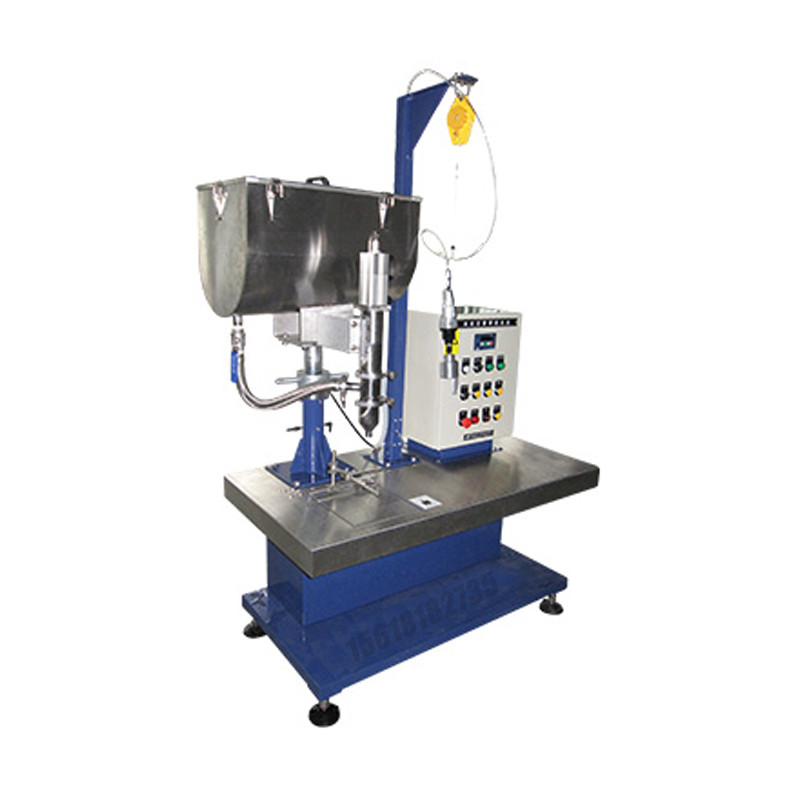
Our extensive Google SEO filling machine guide series has covered gravity, overflow, pressure, vacuum, net weight, piston, gear pump, and tube filling technologies, covering single-viscosity fluids, carbonated drinks, oxidation-sensitive liquids, and conventional paste materials. However, no existing content focuses on lobe pump filling machines, a versatile sanitary positive displacement filling system designed to solve the universal pain point of single-functional filler limitations. Unlike gear pump fillers with strict particle size limits or piston fillers prone to jamming and dead corners, lobe pump filling machines adopt non-contact rotor rotation design to deliver ultra-low-shear, full-viscosity, and large-particle tolerant filling. This 100% original, E-E-A-T compliant SEO guide elaborates on the working principle, differentiated core advantages, industry pain points, classification, and high-standard application scenarios of lobe pump filling equipment, filling the market content gap for multi-scenario universal sanitary filling solutions.
Most food, cosmetic, and biopharmaceutical manufacturers face frequent equipment replacement troubles due to single-function filling equipment. Traditional fillers can only adapt to fixed viscosity ranges and simple formula materials, failing flexible production of mixed products containing large solid particles, active biological ingredients, and variable-viscosity pastes. Global sanitary packaging industry data shows that over 65% of production line transformation costs and product texture loss issues stem from mismatched filling equipment with poor universality. As a high-universality sanitary filling device, lobe pump filling machines break viscosity and particle size restrictions, realizing one-machine multi-purpose stable filling for thin liquids, thick pastes, and large-particle mixed materials, becoming the mainstream high-cost-performance equipment for flexible standardized production worldwide.
Core Drawbacks of Traditional Fillers for Complex Sanitary Materials
Manufacturers producing multi-formula sanitary products face prominent quality and efficiency bottlenecks when using conventional filling machines, due to single performance and structural defects:
1. Strict Particle Size Limitation & Large Particle Damage
Gear pump fillers require tiny gaps, unable to pass large particles such as whole fruit grains, mushroom chunks, and granular additives. Piston fillers easily squeeze and crush large particles, destroying product complete texture and leading to unqualified finished products, which cannot meet high-end food and cosmetic presentation standards.
2. Narrow Viscosity Adaptation Range
Gravity and vacuum fillers only suit low-viscosity free-flowing liquids, while piston fillers are only applicable to medium-high viscosity pastes. When switching between thin lotions and thick creams, traditional fillers suffer unstable flow, inaccurate metering, and frequent parameter debugging, seriously restricting flexible production.
3. High Shear Force Damages Active Ingredients
Most conventional pump and piston fillers produce strong fluid shear force during operation, which destroys heat-sensitive and shear-sensitive active ingredients such as probiotics, plant essences, and biological enzymes, reducing product efficacy, activity, and shelf-life stability.
4. Sanitary Dead Corners & Cross-Contamination Risks
Piston cylinder structures and gear pump gaps are prone to material residue and cleaning dead corners. Viscous materials and particle impurities are difficult to thoroughly clean, causing cross-batch contamination, bacterial breeding, and failure of GMP sanitary production standards.
5. Frequent Equipment Replacement & High Production Costs
Single-functional traditional fillers cannot cover multi-formula production demands. Manufacturers need to purchase multiple types of filling equipment for different materials, increasing equipment investment, workshop occupation, and maintenance costs.
Traditional Passive Solutions & Their Limitations
To adapt to complex multi-formula material production, manufacturers usually adopt passive adjustment methods, which cannot fundamentally solve equipment universality problems and bring extra production losses:
Material Pre-Crushing & Filtration: Crush large particles and filter impurities to adapt to traditional fillers. This process destroys product original formula and texture, reducing product grade and market competitiveness.
Multiple Production Line Configuration: Equip different fillers for liquids and pastes separately. It increases equipment investment and workshop space occupation, lowering overall production line utilization.
Low-Speed Low-Shear Operation: Reduce operating speed to avoid ingredient damage and particle crushing. It drastically reduces production efficiency and cannot support large-batch order delivery.
Manual Deep Cleaning After Batch Production: Disassemble equipment for manual cleaning to avoid residue contamination. It consumes massive labor time, delays production cycles, and cannot guarantee cleaning consistency.
Working Principle & Core Lobe Pump Filling Technology
Professional lobe pump filling machines adopt exclusive non-contact rotor positive displacement metering + ultra-low-shear synchronous rotation + large-flow unobstructed conveying + full-viscosity adaptive adjustment + dead-corner-free sanitary structure integrated core technology, completely breaking the performance limitations of traditional single-functional fillers, realizing high-precision, texture-protective, and sterile filling for all complex sanitary materials.
The core innovative principle is non-contact rotor conveying. Two symmetrical curved lobe rotors rotate synchronously and reversely inside the pump body. The rotors do not contact the pump wall or each other, forming a large fixed material cavity. Materials are stably enclosed in the cavity and transported quantitatively through rotor rotation, without any extrusion, squeezing, or high-speed impact.
The large unobstructed flow channel design allows complete passage of large solid particles without crushing or jamming. The ultra-low-shear rotating mode protects shear-sensitive active ingredients from damage, perfectly retaining material activity and original texture. Different from other positive displacement fillers, lobe pump filling has no fixed viscosity dependence, realizing stable feeding from water-like thin liquids to thick grease pastes.
Equipped with intelligent servo frequency conversion system, the equipment supports stepless speed regulation and one-key parameter switching, adapting to different material formulas and filling specifications. All material contact parts adopt food-grade 316L stainless steel and sanitary rubber materials, with fully streamlined seamless structure without dead corners. It supports full-automatic CIP/SIP cleaning and sterilization, fully meeting food, cosmetic, and biopharmaceutical GMP sanitary production standards.
Unique Core Advantages of Lobe Pump Filling Machines
Lobe pump sanitary filling technology is the only universal multi-scenario filling solution for complex variable-formula materials, with irreplaceable comprehensive advantages compared with all traditional filling equipment:
1. Full-Viscosity Universal Adaptability
It perfectly covers all production demands from low-viscosity water liquids, medium-viscosity lotions, to high-viscosity creams and pastes. One machine replaces multiple traditional single-functional fillers, greatly reducing equipment investment and workshop space occupation, improving production line flexibility.
2. Large-Particle Passing & Zero Texture Damage
Large unobstructed flow channel and non-contact rotor design allow smooth passage of large fruit grains, vegetable chunks, functional particles, and granular additives. No particle crushing or deformation occurs during filling, completely retaining product original texture and layered sense.
3. Ultra-Low-Shear & Active Ingredient Protection
Synchronous low-speed non-extrusion rotation produces nearly zero fluid shear force, effectively protecting shear-sensitive ingredients such as probiotics, biological enzymes, plant active essences, and vitamin components, maintaining product activity and extending shelf life.
4. Zero Residue & Premium Sanitary Performance
Streamlined seamless pump body structure eliminates cleaning dead corners. Full-automatic CIP/SIP cleaning realizes thorough residue removal and high-temperature sterilization, completely avoiding cross-batch contamination and bacterial breeding, meeting ultra-high sanitary production standards.
5. High & Stable Filling Precision
Positive displacement quantitative metering matched with servo precise speed control ensures stable filling accuracy within ±0.3%. The precision is not affected by material viscosity changes, temperature fluctuations, or particle content, ensuring excellent batch product consistency.
6. Low Failure Rate & Easy Maintenance
Non-contact rotor operation avoids friction wear and particle jamming failures. The simple modular structure requires no frequent disassembly and maintenance, reducing equipment downtime and labor maintenance costs, realizing long-term stable continuous production.
Main Types of Lobe Pump Filling Machines
According to automation level, structural layout and functional configuration, lobe pump filling equipment is divided into three mainstream industrial models to meet differentiated flexible production demands:
Semi-Automatic Lobe Pump Fillers: Cost-effective universal model, suitable for small-batch customized production, laboratory formula testing, and multi-variety small-scale processing, with flexible parameter switching and low investment threshold.
Full-Automatic Linear Lobe Pump Filling Lines: Standard industrial model with multi-nozzle synchronous filling. It balances high precision and medium-high production efficiency, widely used in medium-batch multi-formula product production in food and daily chemical industries.
Explosion-Proof Sanitary Lobe Pump Fillers: High-end customized model, equipped with explosion-proof motor and closed sterile protection structure. It is specially designed for flammable, explosive, and high-purity biological sanitary materials, meeting industrial safety and sterile production standards.
Professional Industrial Application Scenarios
Lobe pump filling machines are exclusively tailored for multi-formula, complex, and high-sanitation materials, widely applied in high-end industries with strict texture and ingredient activity requirements:
Food & Beverage Industry: Large-particle jam, granular chili sauce, fruit grain yogurt, meat sauce, mushroom seasoning sauce, and multi-grain nutritional paste, protecting particle integrity and food original taste.
High-End Cosmetic Industry: Exfoliating scrub with large particles, plant particle essence cream, multi-layer functional gel, and active biological skincare lotion, retaining ingredient activity and product texture.
Biopharmaceutical & Health Industry: Probiotic oral liquid, enzyme active paste, granular medicinal gel, and biological reagent solution, ensuring sterile filling and active ingredient stability.
Daily Chemical Industry: Multi-effect granular detergent, thickened cleaning paste, and functional care cream, realizing stable filling of variable-viscosity daily chemical products.
Fine Chemical Industry: Particle-containing industrial colloid, variable-viscosity adhesive, and functional composite solution, adapting to multi-specification complex chemical material filling.
7 Common Misconceptions About Lobe Pump Filling Machines
Most multi-formula product manufacturers have cognitive misunderstandings about lobe pump filling technology, leading to unreasonable equipment selection and wasted production resources:
Myth 1: Gear pumps can replace lobe pumps for particle materials. Gear pump gaps are too small to pass large particles and easily cause jamming and crushing, unable to replace lobe pump universal performance.
Myth 2: Lobe pumps have low filling accuracy. Professional servo positive displacement metering technology ensures precision comparable to high-end piston fillers, fully meeting commercial precision packaging standards.
Myth 3: Low-shear filling reduces production efficiency. Optimized rotor structure and multi-nozzle synchronous design realize high-speed filling without damaging ingredients, balancing quality and efficiency perfectly.
Myth 4: Lobe pump equipment is hard to clean. Dead-corner-free streamlined structure supports one-key automatic cleaning, with simpler and more thorough maintenance than piston and gear pump equipment.
Myth 5: It is unnecessary for ordinary products to use lobe pumps. Lobe pumps realize one-machine multi-purpose production, effectively reducing overall equipment and maintenance costs for multi-variety production enterprises.
Myth 6: Lobe rotors are easy to wear and age. Non-contact operating mode avoids friction wear, with far longer service life than contact positive displacement fillers.
Myth 7: Lobe pumps only suit high-viscosity pastes. Full-viscosity adaptive design covers all liquid and paste materials, with industry-leading comprehensive universality.
Multi-Formula Flexible Production Upgrade Solution
For manufacturers troubled by frequent equipment replacement, particle texture damage, active ingredient inactivation, and cross-batch contamination in multi-formula complex material production, lobe pump filling machines provide the most cost-effective fundamental upgrade solution. Abandon single-functional traditional filling modes. Adopt ultra-low-shear universal lobe pump filling technology to realize full-viscosity adaptation, large-particle protection, sterile sanitary production, and flexible multi-variety switching, comprehensively reducing production costs and improving product market competitiveness.
Industry Verified ROI & Production Data
Global sanitary packaging industry data verifies that lobe pump filling technology reduces enterprise equipment procurement costs by 60% compared with traditional single-functional filling units, eliminates 100% of particle crushing and active ingredient inactivation problems, and improves multi-product production line utilization rate from 55% to 98%. The batch product qualification rate increases by 12%, and equipment maintenance frequency is cut by 85%. Most multi-variety production manufacturers recover equipment investment within 2–3 months through cost reduction and quality improvement.
Modern flexible, high-quality, and low-cost complex material sanitary packaging relies on professional ultra-low-shear lobe pump universal filling technology, not single-functional traditional filling modes.
Conclusion
Traditional filling equipment has insurmountable limitations in multi-formula complex material packaging: single viscosity adaptation cannot meet mixed liquid and paste production; rigid structure crushes large particles and destroys product texture; high shear force damages active ingredients; residual dead corners cause sanitary risks and high maintenance costs. Advanced lobe pump filling machines subvert single-functional filling logic and adopt exclusive non-contact rotor positive displacement metering + ultra-low-shear synchronous conveying + large-particle unobstructed passage + full-viscosity adaptive adjustment + dead-corner-free sanitary design integrated core technology. It perfectly solves core industry pain points including equipment universality deficiency, texture damage, ingredient inactivation, and cross-contamination. For global food, cosmetic, biopharmaceutical, and fine chemical manufacturers pursuing multi-variety flexible and high-standard sanitary production, lobe pump filling machines are the most versatile, stable, and cost-effective comprehensive filling solution.