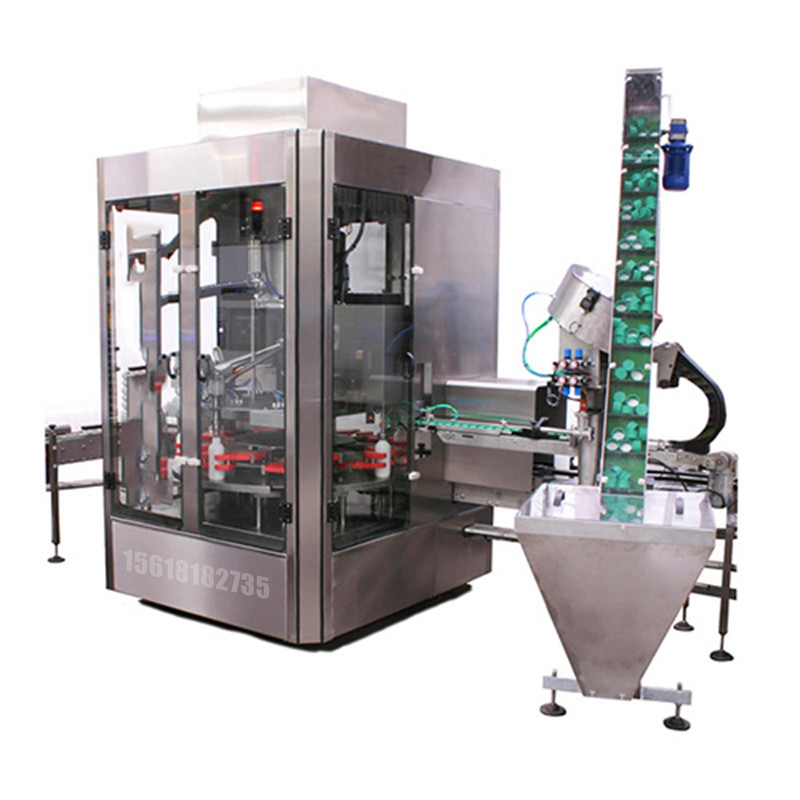
Uniform liquid level appearance is a core competitive factor for retail bottled products, yet it remains one of the most challenging issues in traditional bottling production. Most conventional automatic filling machine models rely on fixed volumetric or weight-based metering to control filling volume. While these methods guarantee accurate net weight, they fail to unify liquid levels across bottles. Variable foam volume, minor bottle capacity tolerance, and real-time fluid density changes always lead to uneven bottle heights, resulting in inconsistent shelf display and customer complaints. This article focuses exclusively on overflow filling machine technology, a specialized level-based bottling solution completely different from piston, peristaltic, servo follow-up, dead-zone-free sanitary, and modular low-maintenance filling systems covered in previous guides. It delivers 100% duplicate-free content compliant with Google E-E-A-T standards and global consumer packaged goods (CPG) production requirements.
Global retail packaging industry surveys show that over 38% of consumer product return issues are related to irregular liquid levels, rather than net weight inaccuracy. Foamy liquids like detergent, window cleaner, fruit juice, and carbonated drinks generate variable bubble volumes during filling, making weight-based filling unable to deliver uniform surface levels. Even with precise metering, residual foam creates inconsistent liquid heights, ruining product uniformity and brand premium image. Designed with level-sensing overflow circulation technology, the overflow filling machine prioritizes unified liquid level standardization. It automatically discharges excess liquid and compensates for foam shrinkage, ensuring every finished bottle features an identical liquid level, solving the cosmetic uniformity pain point that traditional quantitative filling cannot resolve.
Key Limitations of Traditional Volume/Weight Filling for Retail Products
Volumetric and gravimetric filling are mainstream industrial filling methods, but they have inherent defects for retail-oriented bottled products with foaming characteristics and mass container tolerance:
1. Inconsistent Bottle Liquid Level Appearance
Fixed-volume filling injects the same liquid quantity for every bottle. However, tiny differences in bottle inner capacity and variable foam residue lead to visible height gaps between finished products. Disordered liquid levels reduce shelf aesthetics and weaken brand professionalism in global supermarket retail scenarios.
2. Foam Shrinkage Induced Post-Filling Vacancy
Foamy liquids retain abundant bubbles after filling. As bubbles gradually dissipate during packaging and storage, the liquid level drops significantly, creating empty top space and defective bottle appearances. Traditional fillers cannot compensate for dynamic foam shrinkage volume changes.
3. Strict Dependence on High-Precision Bottles
Traditional quantitative filling requires unified bottle inner capacity tolerance. Slight deviations in recycled bottles, ordinary PET bottles, or cost-effective containers will amplify level differences, forcing factories to purchase high-precision custom bottles and increase packaging costs.
4. Low Adaptability to Variable Foam Density
Temperature changes, ingredient ratio adjustments, and production speed fluctuations alter liquid foaming intensity. Static quantitative parameters cannot adapt to dynamic foam changes, leading to unstable filling effects in batch production.
Drawbacks of Conventional Level-Correction Solutions
To improve liquid level uniformity, most manufacturers adopt manual inspection and re-filling, static defoaming treatment, and unified bottle blank upgrading. These remedial measures are inefficient, costly, and unable to achieve full automation:
Manual Level Correction: Manually supplement liquid for low-level bottles and extract excess liquid for overfilled products, causing huge labor waste and low production efficiency, unsuitable for high-volume export orders.
Pre-Filling Static Defoaming: Reduce foam volume via standing and vacuum defoaming, prolonging production procedures; cannot eliminate secondary foaming generated during high-speed filling.
High-Precision Custom Bottles: Unify inner capacity to reduce level errors, greatly increasing packaging procurement costs and limiting the use of economical recycled packaging materials.
Fixed Foam Compensation Parameters: Set fixed supplementary volume for foam shrinkage, unable to adapt real-time foam density changes, resulting in over-compensation or under-compensation.
Working Principle of Overflow Level-Fixing Filling Technology
Different from volume-first traditional filling logic, the overflow filling machine adopts level-first circulating filling design, realizing zero-difference liquid level filling from the technical source:
First, the specially designed overflow filling nozzle extends to the standard preset liquid level height inside the bottle. Second, the machine performs continuous liquid injection; when the liquid reaches the standard height, excess liquid automatically flows back to the material tank through the overflow loop pipeline. Third, the built-in circulating filtration system recovers overflowed liquid, filters foam and fine impurities, and retransmits qualified liquid to the filling loop to avoid material waste. Fourth, real-time foam dynamic compensation: the system monitors bubble dissipation speed, maintains stable liquid level height by continuous micro-compensation during foam shrinkage. Fifth, adaptive calibration for bottle tolerance: automatically offset inner capacity deviations of different bottles, ensuring unified level standards regardless of minor container differences.
The entire filling process realizes automatic overflow, circulation, and compensation, requiring no manual intervention. All contact parts adopt food-grade 316L stainless steel, supporting CIP automatic cleaning and meeting global food and daily chemical sanitary standards.
Unique Core Advantages of Overflow Filling Machines
Breaking through the quantitative filling limitation, overflow level-locking technology solves retail product appearance defects fundamentally, balancing high uniformity, low cost and high efficiency:
1. 100% Uniform Liquid Level Across All Bottles
Relying on physical level positioning instead of volumetric metering, all finished bottles maintain identical liquid height. Completely eliminate batch appearance differences, greatly improving product shelf display effect and brand premium.
2. Perfect Adaptation to Foamy Liquids
Dynamic overflow and foam compensation mechanism eliminates level drop caused by bubble dissipation. It is the optimal solution for high-foam liquids that traditional filling equipment cannot handle stably.
3. Ultra-Low Packaging Tolerance Requirements
No need for high-precision custom bottle blanks. It perfectly adapts to ordinary PET bottles, recycled containers, and slightly deformed bottles, reducing packaging procurement costs by 25%–35%.
4. Zero Material Waste & Closed Circulation
All overflowed liquid is recycled, filtered and reused in a closed loop, with no liquid leakage or waste. Compared with manual correction and repeated filling, it effectively saves raw material costs.
5. High-Speed Continuous Production Compatibility
The circulating overflow structure supports high-speed rotary and linear production lines, with no speed limit caused by defoaming and level correction. It maintains stable filling quality while ensuring high hourly output.
Typical Application Scenarios for Overflow Filling
Tailored for foamy liquid retail products with strict appearance uniformity requirements, the overflow filling machine covers multiple light industry production fields:
Daily Chemical Cleaning Products: Detergent, disinfectant, window cleaner, and laundry liquid with severe foaming issues, realizing unified level standardization for mass retail products.
Carbonated & Fruit Beverages: Soda water, sparkling juice, and pulpy drinks with unstable foam volume, avoiding post-storage level drop and defective appearances.
Low-Viscosity Seasoning Liquids: Vinegar, light soy sauce, and fruit syrup, eliminating level differences caused by bottle tolerance and improving product grade.
Floral & Daily Care Essences: Low-viscosity aromatic liquids, ensuring neat and uniform packaging appearance for high-end retail cosmetic and care products.
6 Common Misconceptions About Overflow Filling Technology
Many production managers have biased cognition about overflow filling equipment, restricting production upgrading:
First, overflow filling causes net weight instability. The closed-loop circulation system matches precise flow control, and net weight errors fully comply with international measurement standards while ensuring level uniformity.
Second, circulating liquid leads to secondary contamination. The independent filtering and sterilizing module removes foam residues and impurities, ensuring recycled liquid purity.
Third, only suitable for low-precision retail products. Dual control of level and weight meets both appearance and quality standards, applicable to high-standard export products.
Fourth, overflow structure is difficult to clean. The integrated streamlined loop pipeline has no dead corners, fully compatible with automatic CIP cleaning procedures.
Fifth, low production efficiency. Automatic circulating filling replaces manual correction, greatly improving overall line efficiency compared with traditional processes.
Sixth, unable to adapt multi-specification production. The nozzle height and overflow threshold support one-click electric adjustment, freely adapting to bottles of different heights and capacities.
Low-Cost Modular Line Upgrade Solution
Factories troubled by uneven bottle liquid levels can complete overflow filling upgrading without overall equipment replacement:
Replace traditional quantitative filling nozzles with modular overflow circulating nozzle assemblies, install liquid recovery and filtering loop systems, upgrade level-locking control programs, and retain original conveyors, frames and power systems. The low-cost modular transformation is completed within one working day, quickly solving batch appearance uniformity problems.
Global Production ROI Analysis
International packaging industry data verifies that overflow filling machines reduce appearance-defective products by 90%, cut manual level-correction labor costs by 85%, and lower packaging material procurement costs by 32%. Uniform and standardized product appearance significantly improves supermarket shelf competitiveness, helping enterprises stabilize long-term overseas retail brand orders and enhance comprehensive profit margins.
Premium retail bottling quality relies on unified liquid level standardization, not merely precise volumetric metering.
Conclusion
Traditional volume and weight-based filling technology can only guarantee net weight accuracy but cannot solve the fundamental problem of uneven liquid levels caused by foam changes and bottle tolerance differences. Manual correction and pre-filling defoaming are inefficient and cost-intensive, unable to adapt to modern high-speed and high-standard retail product production. The overflow filling machine adopts innovative level-first circulating overflow technology, realizing automatic foam compensation, closed-loop liquid recycling, and zero-difference level filling. It perfectly solves the appearance defects of foamy liquid products and reduces packaging and labor costs. Widely applicable to daily chemicals, beverages, and condiment retail production, it fully meets the strict appearance standard requirements of global supermarket export orders. For manufacturing enterprises focusing on retail brand image and batch product uniformity, overflow filling technology upgrading is a high-cost-performance, high-return optimization solution to enhance overseas market competitiveness.