

Automatic Filling Machine: Smart Packaging Solutions for Modern Manufacturing
2026-06-26 09:03:25
admin
15
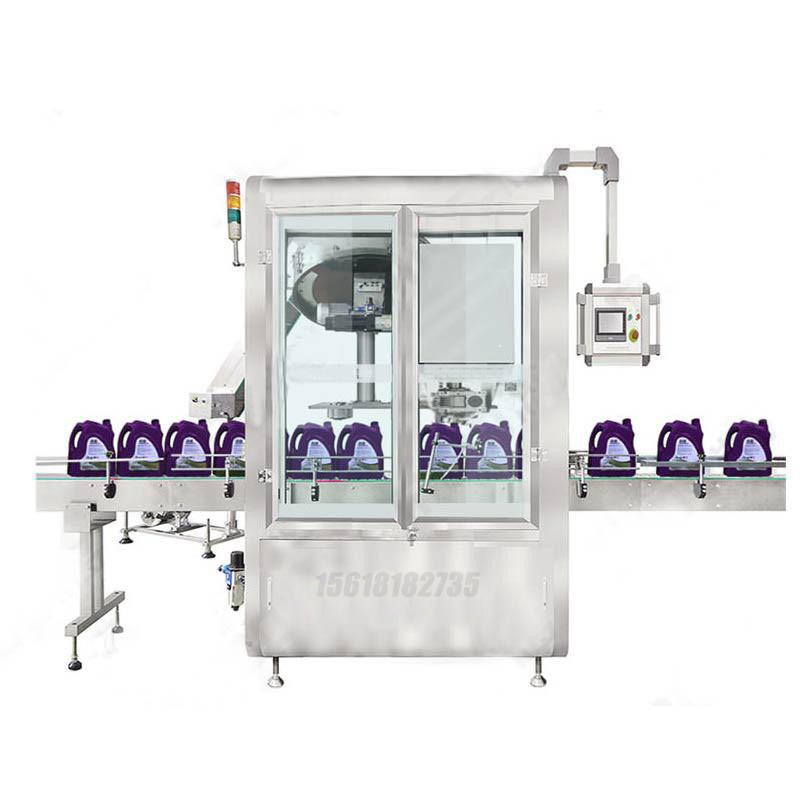
Meta Description: Upgrade your packaging line with a high-precision automatic filling machine. Learn about smart functions, sanitary design, regulatory compliance, and key advantages for food, cosmetic, and pharmaceutical manufacturing in 2026.
In modern automated manufacturing, packaging efficiency and sanitary compliance are no longer secondary concerns—they are core factors that determine brand competitiveness and market qualification. An automatic filling machine serves as the key intelligent equipment for standardized packaging production, replacing traditional labor-intensive filling processes. Featuring automated positioning, precise metering, leak-proof operation, and easy maintenance, modern filling systems help manufacturers achieve stable output, zero cross-contamination, and long-term operational cost savings across diverse production scenarios.
Unlike basic filling devices that only complete simple dosing tasks, 2026 new-generation filling machines adopt fully optimized mechanical and electrical integration design, compatible with intelligent production line docking, remote parameter adjustment, and real-time production monitoring. This article focuses on unique functional advantages, sanitary design highlights, industry compliance standards, and practical application values that are rarely covered in basic guides, providing professional reference for global factory renovation and new equipment procurement.
Advanced Functional Features of Modern Automatic Filling Machines
The core competitiveness of high-end industrial filling machines lies in their refined functional design tailored to industrial production pain points. Beyond basic filling functions, they integrate multiple practical intelligent and sanitary features to adapt to high-standard industrial production:
Intelligent Servo Metering System: Equipped with high-precision servo motors and digital metering modules, the machine realizes real-time correction of filling volume. It effectively avoids filling deviation caused by material density changes, temperature fluctuations, and equipment operation wear, maintaining a filling accuracy error within ±0.5% for long-term continuous operation. This far exceeds the precision standard of ordinary semi-automatic filling equipment.
Automatic Anti-Foaming & Anti-Drip Technology: For easily foaming liquids such as beverages, protein drinks, and chemical solvents, the adjustable low-speed filling and layered liquid injection design prevents bubble generation and liquid overflow. The self-sealing anti-drip nozzle automatically cuts off residual materials after filling, keeping bottle mouths, conveyor belts, and workshop environments clean without manual cleaning intervention.
One-Click Parameter Memory & Fast Switching: The built-in industrial PLC system can store dozens of production parameter formulas. When switching product specifications or container types, operators only need to call preset data without repeated debugging, greatly shortening product changeover time and improving the overall flexibility of multi-variety production lines.
Full-Automatic CIP Cleaning Function: Food, cosmetic, and pharmaceutical-grade filling machines support automatic CIP (Clean-in-Place) cyclic cleaning. The internal pipeline and filling nozzle can complete high-temperature flushing and disinfection independently, thoroughly removing residual materials and avoiding bacterial growth and cross-formula contamination, fully meeting global sanitary production requirements.
Sanitary & Safety Design: Meet Global Industrial Compliance Standards
Industrial production in developed regions such as Europe, America, and Southeast Asia has extremely strict requirements for production equipment safety and sanitation. New-generation automatic filling machines are fully optimized in structural design and material selection to pass mainstream international certification standards:
All contact parts of materials are made of food-grade 304/316L stainless steel, which is corrosion-resistant, high-temperature resistant, and non-deformable. The smooth seamless welding structure leaves no dead corners for dirt accumulation, solving the cleaning difficulties of traditional gap-type equipment. The whole machine conforms to GMP, FDA, and CE industrial production standards, fully adapting to the strict quality inspection requirements of high-end industries.
In terms of operational safety, the equipment is equipped with emergency stop protection, no-bottle no-filling induction, overload power-off protection, and safety grating anti-pinch devices. It effectively eliminates operational safety risks in high-speed production, ensuring stable and safe long-term operation of the production line.
Unique Advantages of Upgraded Filling Equipment for Industrial Production
Many manufacturers only focus on equipment price when purchasing filling machines, ignoring the long-term value brought by upgraded intelligent equipment. Compared with traditional filling equipment, modern automatic filling machines have irreplaceable industrial advantages:
Stable Batch Consistency: Manual and semi-automatic filling inevitably produce batch errors, leading to unqualified product net content and customer complaints. Intelligent digital metering ensures consistent filling volume for every product in mass production, stabilizing product quality and improving brand reputation.
Significant Labor & Cost Saving: The fully automated workflow realizes unmanned filling operation, reducing reliance on manual sorting and auxiliary filling. One set of equipment can replace 3–5 manual workers, greatly reducing long-term labor costs while improving production efficiency by 2–3 times.
Low Failure Rate & Easy Maintenance: The modular integrated structure simplifies the internal mechanical structure of the equipment, reducing the failure rate of vulnerable parts. The detachable design facilitates daily inspection and replacement of parts, lowering later maintenance costs and production downtime losses.
Low Energy Consumption & Eco-Friendly Operation: Optimized servo energy-saving control technology automatically adjusts power output according to production speed, avoiding invalid energy consumption. The closed filling structure reduces material waste and volatile gas emission, conforming to global industrial energy-saving and environmental protection policies.
Specialized Application Scenarios by Industry
According to the differentiated production needs of various industries, automatic filling machines have achieved targeted functional iteration, realizing professional customized filling for different materials and production environments:
Food & Beverage Manufacturing: Suitable for non-carbonated drinks, fruit puree, jam, edible oil, condiments, and dairy products. The anti-foaming and sanitary design ensures food safety, supporting high-speed continuous filling for bottled, canned, and barreled products.
Cosmetic & Personal Care Industry: Adaptable to toner, lotion, essence, cream, and shampoo filling. The low-shear filling design protects active ingredient activity, and the dust-free and sterile configuration meets cosmetic clean workshop production standards.
Pharmaceutical & Health Care Industry: Used for liquid medicine, oral solution, ointment, and health product filling. Ultra-high precision metering and fully sealed sterile filling system ensure drug batch stability and meet pharmaceutical industry GMP production specifications.
Daily Chemical & Fine Chemical Industry: Applicable to detergent, disinfectant, liquid fertilizer, and industrial reagent filling. The anti-corrosion pipeline and explosion-proof optional configuration adapt to the filling needs of corrosive and volatile special materials.
How to Optimize Filling Machine Operation & Service Life
High-quality equipment matching standardized operation and maintenance can maximize production efficiency and extend service life. Here are professional daily operation suggestions for industrial filling machines:
First, perform daily pre-production inspection, focusing on nozzle tightness, pipeline blockage, and sensor sensitivity to eliminate hidden dangers in advance. Second, start CIP automatic cleaning after daily production to avoid material residue deterioration affecting subsequent production. Third, regularly lubricate transmission parts and calibrate metering accuracy to ensure long-term stable filling precision. Finally, store production operation and maintenance records to facilitate equipment regular inspection and parameter optimization.
Frequently Asked Questions
Q1: Can automatic filling machines adapt to irregular containers?
Yes. Modern filling machines are equipped with adjustable positioning fixtures and intelligent container induction systems, which can stably complete filling for round bottles, square bottles, flat tubes, and irregular special-shaped containers, with strong compatibility.
Q2: Does intelligent filling equipment require complex operation training?
No. The human-machine touch screen interface adopts simplified visual operation logic. Workers can master parameter setting, equipment start-stop, and fault inquiry in a short time, with low operation threshold and strong practicability.
Q3: What is the return cycle of automatic filling machine investment?
According to industrial data, for medium and large-scale production lines, the labor cost and material waste saved by automatic filling equipment can recover the procurement cost within 1–2 years, with long-term economic benefits far exceeding traditional manual filling modes.
Conclusion
In the era of intelligent industrial upgrading in 2026, automatic filling machines have evolved from single packaging equipment to core intelligent equipment integrating precision production, sanitary supervision, and cost control. Enterprises that adopt high-standard automatic filling systems can effectively solve the pain points of unstable quality, low efficiency, and high cost in traditional packaging production, helping them stand out in the fierce global market competition and achieve standardized, clean, and efficient sustainable production.


