Meta Description: Wasting materials and time with unstable filling equipment? Learn how a premium industrial filling machine optimizes output, reduces downtime, and fits food, cosmetic, chemical, and pharmaceutical production lines in 2026.
For modern manufacturing and packaging businesses, inconsistent filling accuracy, frequent machine downtime, and excessive material waste are the top three pain points that drag down profit margins. A high-quality industrial filling machine is no longer just a basic packaging device—it is a core productivity asset that stabilizes product quality, standardizes batch production, and lowers long-term operational costs. Unlike generic introductory content, this practical guide focuses on real production scenarios, common equipment pitfalls, cost-saving benefits, and actionable selection tips to help factory owners and production managers invest in the right filling solution.
Why Your Production Line Needs a Modern Filling Machine (Not Traditional Equipment)
Many small and medium-sized manufacturers still rely on outdated semi-automatic filling devices or manual auxiliary filling processes. These traditional methods work for ultra-small-batch trial production but fail to meet modern market demands in multiple dimensions. Traditional filling equipment suffers from obvious flaws: unstable metering accuracy leading to uneven product net content, frequent liquid dripping and powder scattering causing raw material loss, and poor compatibility that cannot adapt to diverse container shapes and product textures.
Upgraded industrial filling machines solve these industry pain points fundamentally. Equipped with intelligent PLC control systems, precision metering sensors, and anti-leakage filling nozzles, these machines deliver consistent filling volume for every batch. Meanwhile, they support one-click parameter switching, enabling fast switching between different product specifications. For mass production, this upgrade directly reduces defective product rates, cuts material waste by 3%–8%, and greatly shortens production downtime caused by equipment errors and adjustments.
Core Working Logic of Smart Industrial Filling Equipment
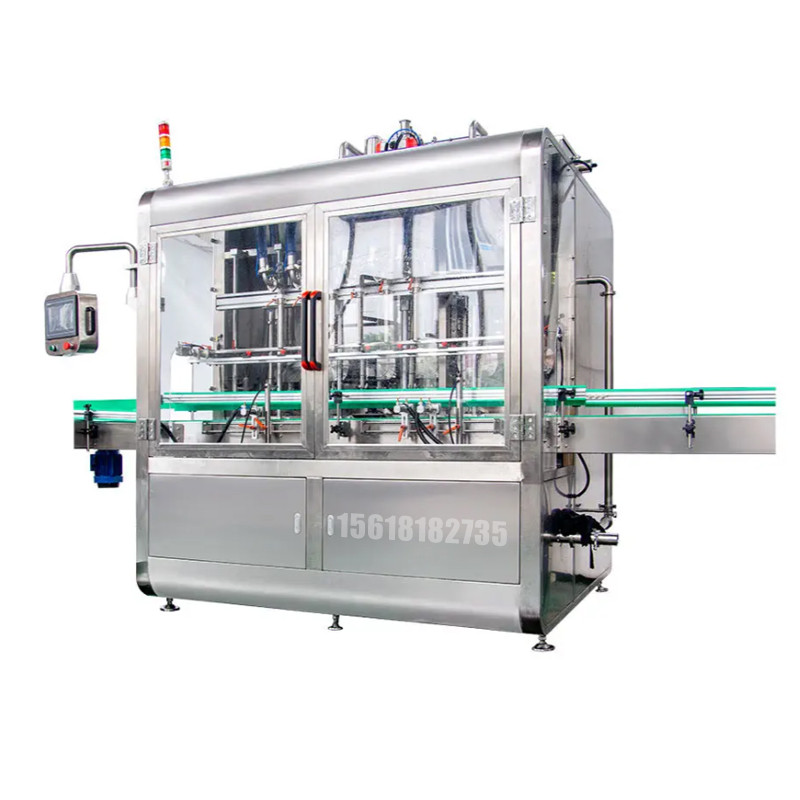
Most buyers only focus on filling speed while ignoring the internal working structure that determines equipment stability. Modern filling machines adopt modular integrated design, mainly including feeding system, precision metering module, automatic positioning system, anti-drip control unit, and human-machine operation panel. The entire filling process runs automatically without manual intervention: containers are positioned by the conveying track, the system detects container availability in real time, and the metering module executes accurate quantitative filling.
Once the filling process is completed, the intelligent anti-drip system instantly closes the discharge port to avoid residual material contamination on bottle mouths and production lines. All production data, including filling quantity, production speed, and error records, can be displayed and stored in real time, facilitating factory production data statistics, quality inspection, and batch traceability. This intelligent working mode is the key difference between high-end industrial filling machines and ordinary traditional filling equipment.
Key Filling Machine Types Classified by Production Scenarios
Different production materials and factory layouts require matched filling machines. Choosing the wrong equipment will lead to low production efficiency and even frequent equipment failures. Below are the most practical classifications based on actual industrial application scenarios.
1. Paste & High-Viscosity Filling Machine
Designed specifically for high-viscosity materials that are difficult to flow, such as face cream, body lotion, tomato sauce, peanut butter, industrial grease, and ointment. Adopting piston quantitative metering technology, this machine overcomes the problem of uneven filling caused by slow material flow. It supports high-precision fixed-quantity filling and is widely used in cosmetic, food processing, and fine chemical industries. It works stably even for materials with high concentration and precipitation characteristics.
2. Powder & Granule Filling Machine
This type of equipment targets dry materials, including milk powder, protein powder, seasoning powder, granular snacks, fertilizer particles, and pharmaceutical granules. It adopts spiral quantitative feeding and vibration auxiliary blanking technology to avoid material bridging and uneven blanking. With dust-proof and sealed design, it effectively prevents powder flying, ensures a clean production environment, and meets food and pharmaceutical hygiene standards.
3. Customized Multi-Functional Filling Machine
Suitable for factories with diversified production needs, supporting free switching between liquid, paste, and low-density granular materials. The modular structure allows flexible replacement of filling nozzles and metering components. It is the best choice for small and medium-sized enterprises with multiple product lines, effectively saving equipment procurement costs and factory layout space compared with purchasing multiple single-function machines.
Top Industry Applications of Modern Filling Machines
With the continuous upgrading of industrial production standards, filling machines have covered almost all packaging industries, with targeted optimized designs for different industry certification requirements.
Cosmetic & Daily Chemical Industry: Meets GMP clean production standards, supports filling of skincare liquids, shampoos, and thick pastes, with anti-pollution and easy-cleaning design to avoid cross-contamination between different formulas.
Food & Beverage Industry: Adaptable to bottled, canned, and bagged packaging of drinks, condiments, and dairy products, ensuring consistent net content of finished products and complying with food safety production specifications.
Pharmaceutical Industry: Adopts fully sealed and sterile filling structure, with ultra-high metering accuracy, suitable for filling medicinal liquids, ointments, and medicinal powders, meeting strict pharmaceutical batch production standards.
Chemical Industry: Equipped with anti-corrosion and explosion-proof configurations, safe for filling disinfectants, chemical solvents, and industrial liquids, solving the safety risks of traditional filling equipment.
6 Critical Factors to Choose a Qualified Filling Machine (2026 Buying Tips)
Many factory owners blindly pursue high-speed equipment but ignore matching degree and after-sales service, resulting in low equipment utilization. Here are the most practical selection criteria for 2026 industrial procurement:
Material Adaptability: Confirm the viscosity, fluidity, and physical characteristics of filling materials to select matching metering methods, avoiding inaccurate filling and material blockage.
Accuracy Standard: Prioritize equipment with error control within ±1%, which can effectively reduce defective products and improve product market competitiveness.
Automation Matching: Select semi-automatic models for small-batch customized production and fully automatic assembly line models for large-scale mass production to balance cost and efficiency.
Material & Hygiene Level: Food and pharmaceutical industries must choose 304/316 stainless steel bodies with full cleaning functions to meet hygiene certification requirements.
Stability & Downtime Rate: Choose equipment with mature modular structure and low failure rate to avoid frequent shutdown maintenance affecting production schedules.
After-sales Support: Prefer suppliers with overseas installation, debugging, and after-sales maintenance services to solve equipment operation problems in a timely manner.
FAQs About Industrial Filling Machines
Q1: Can one filling machine handle different types of materials and containers?
Yes. Multi-functional customized filling machines support switching between liquids, pastes, and granular materials, and adapt to bottles, cans, tubes, and pouches of different sizes by adjusting parameters and replacing individual accessories, which is very cost-effective for multi-product factories.
Q2: How long is the service life of industrial filling equipment?
With regular cleaning and daily maintenance, high-quality industrial filling machines can work stably for 8–12 years. Standard stainless steel structure and mature electronic control components effectively reduce aging and failure problems.
Q3: Is automatic filling machine suitable for small factories?
Absolutely. Manufacturers provide mini fully-automatic and high-efficiency semi-automatic models for small and medium factories. These equipment occupy small space, have low energy consumption, and significantly improve production efficiency compared with manual filling, with a short return on investment cycle.
Final Thoughts
In the increasingly competitive manufacturing industry, refined production management and stable product quality have become the core of enterprise competition. A high-quality industrial filling machine is not only a packaging equipment but also an important tool for factories to achieve cost reduction and efficiency improvement. By selecting targeted filling equipment according to production scenarios, enterprises can effectively reduce material waste, stabilize product quality, reduce manual dependence, and lay a solid foundation for large-scale, standardized, and intelligent production in 2026 and beyond.